Fence Contractors on Noise-Reducing Fence Options
Traffic at heavy traffic, the neighbor's late-night deck audio speakers, yard staffs at first light. Sound has a method of moving under gateways, jumping off patio areas, and blunting a silent early morning. Property owners call us anticipating a wonderful fence that makes the world go silent. That is not what a fencing can do. A well made barrier can transform rough, direct sound right into a history wash that you hardly register. The difference in between a weekend break migraine and a backyard you in fact use typically boils down to options about elevation, mass, continuity, and positioning. Those choices are where an experienced Fence Contractor earns the fee.
What obstructs sound, what does not, and why that space matters
Noise relocations as resonance. Assume in 2 pails: airborne sound riding via the air, and structure-borne audio traveling through solids. A fencing takes care of air-borne noise, which suggests the guidelines are easy and unrelenting. A lot more mass amounts to more reduction. Less gaps amounts to far better performance. Greater height presses the audio darkness deeper right into your backyard. Soft surfaces on the resource side minimize reflections. If you have actually ever leaned around a post and listened to a vehicle a lot more plainly, you have really felt just how even a little opening comes to be an acoustic leak.
A 6 foot privacy fence will typically cut 5 to 10 decibels when mounted snugly and backed by landscaping. That can cut the subjective noise degree by regarding a third. Jump to 8 feet with denser panels and a secured base, and you can see 10 to 15 decibels under the ideal conditions. That is the distinction between invasive and bearable. Claims of 30 decibels from a yard fencing create wonderful marketing, but they hardly ever turn up in the area unless you integrate barriers with distance, terrain, and planting.
The 3 habits of peaceful fencings: height, mass, and continuity
The cheapest error we see is a good panel with a bad mount. A cedar panel that looks clean but drifts 2 inches off quality will whistle under pressure. A composite arrangement with voids where bays satisfy will pass even more sound than you anticipate. And an open latticework perched in addition to a hefty base looks great yet pressures sound with its windows.
Height provides you a darkness zone, like a rock in a stream that calms the water behind it. Mass includes the grunt that withstands resonance. Connection, meaning no gaps or loosened seams, stops leakages. You can hit two out of three and still lose. Hit all three, and also modest materials work harder.
Material options, with field notes from jobs that worked
Veteran Fencing Contractors carry viewpoints baked by weather condition, time, and callbacks. Below is exactly how we analyze the huge categories, in addition to the sort of information a Fence Installer duke it outs on site.
Solid timber, done the peaceful way
Wood is friendly, repairable, and simple to customize. For noise, avoid pet ear pickets on rails unless you agree to overlap each picket by an inch or even more. The far better relocation is a board-on-board or complete tongue and groove panel. Choose 5/8 to 3/4 inch thick boards, not feathery supply. A 1 by 6 true tongue and groove cedar or redwood panel has the mass and the tightness you need.
We ended up a work along a two-lane road where the owner had a 6 foot stockade that rattled in the wind. We restore with 8 foot tongue and groove over steel articles, secured the bottom with a put curb that followed quality, and added 2 feet of boxwood inside the line. Measured near the outdoor patio, peak pass-by sound dropped from the mid 70s to low 60s decibels. Automobile doors still stood out, yet discussion quit being a screaming match.
Wood relocations with moisture and reduces over time. Anticipate hairline joints unless you back the panel with battens or make use of interlacing accounts. Great equipment matters. Utilize a continual top cap to tense the period. If you avoid the cap, your rails will warp, open mini voids, and allow sound leak.
Vinyl privacy, thicker when possible
Vinyl can be quiet if the profile is heavy and the internal webs are not lightweight. Slim vinyl sings in the wind and telegraphs influence sound. Search for privacy panels with interlocking boards and tongue and groove edges, then adhesive or seal the unions at blog posts to eliminate rattle. White mirrors some high frequencies perfectly, yet the real advantage is reduced upkeep. Where we find trouble is at the base. Numerous plastic lines float off quality on braces. We commonly put an aesthetic or quality a compacted base so the lower rail kisses the surface area with a seal strip.
Composite and engineered panels
Composites include mass. That is the headline. Lots of composite boards run denser than timber, and the panels lock up without shrinking. A fence builder who understands the system will certainly pin every joint and usage shut cell tape where boards satisfy blog posts. We had a project behind a public transportation line where a 7 foot composite operate on steel H messages, with neoprene message spacers, outperformed a thicker cedar mount by concerning 3 to 4 decibels at ear degree. It sets you back more in advance, but the consistency over seasons repays in stable performance.
Masonry, concrete, and gabions
If you have area and budget plan, a solid wall wins. A six inch concrete or CMU wall with a stucco skin will outplay any kind of wood or vinyl fencing for noise control. The mass legislation uses, and masonry lugs mass in spades. Where customers hesitate is cost and allowing. In some cities, an 8 foot masonry wall surface requires design, rebar routines, full grounds, and assessments. You trade noise for a longer construct and a heavier bill.
Gabions, cord baskets full of rock, divided the distinction. They are modular, festinate in modern-day landscapes, and bring genuine mass. The trick is rock option. Use thick rock, not light river rock. Pack the baskets limited to restrict air courses. A 2 to 3 foot thick gabion belt along a building line can peaceful traffic incredibly well, especially when coupled with a bush on your side.
Specialty acoustic panels and systems
There are purpose-built acoustic fencing systems that pair thick cores with absorbent faces. Some lines use a mineral wool or foam inside behind a perforated skin that absorbs reflections. We utilize these when the budget and the sound profile justify it, like near a commercial chiller backyard or a hectic arterial. Focus on wind loading. Absorptive panels catch gusts, and a Fence Installer without the right posts and grounds will be back after the very first storm. When these systems are specced correctly, you can acquire one more 3 to 6 decibels beyond a heavy personal privacy construct, with much less bounce-back into your yard.
The peaceful details most individuals miss
A fence is not a drum. Treat it like a door that should secure versus a framework, and your outcomes improve.
- Post choice issues. Steel posts minimize flex, maintain panels tight, and allow thinner accounts to act larger. If you choose timber posts for the appearance, sleeve them in steel where they get in concrete, or use laminated posts to withstand twist.
- Bottom seals pay off. A pressure-treated curb, stonework trim strip, or aluminum sill plate with weatherstripping stops the ground void that leakages sound and pets.
- Staggered joints beat straight joints. Where panels satisfy, include an upright batten on both faces, or use a shiplap joint. If you can see daytime currently, you will hear sound later.
- Gates are powerlessness. Use full border steel frames, dual decrease rods, and brush or rubber seals. Set thresholds so the sweep get in touches with the sill without binding.
- Surface appearance assists. On the noise-facing side, a corrugated or slatted structure with absorbent backing can decrease representation. On the lawn side, keep it smooth for looks and maintenance.
Height, problems, and the truth of codes
You can build silent or you can develop legal. Smart clients do both. Many towns top yard fencing elevation at 6 feet, front lawns at 4 feet, with variations for edge whole lots and arterial roadways. Acoustic performance enhances with each foot of height, so we chase after 7 or 8 feet where code permits or where a design letter opens the door. If you can not go higher by code, you can often install a trellis-style topper full of acoustic mesh, which keeps the aesthetic light while including functional height.
Setbacks matter. If your building line rakes downhill to the road, the fencing requires to crest high points, not adhere to every dip. A Fence Installer with a transit degree and the perseverance to step panels as opposed to rake them will maintain a constant acoustic line. HOA guidelines occasionally fight this method. A knowledgeable Fencing Contractor will certainly meet the board and walk them via sightlines and safety and security to win a variance.
Plants, berms, and the misconception of the magic hedge
A row of arborvitae looks silent. It is not. Leaves and needles do a little to scatter high frequencies, yet they do not quit reduced rolls. What plants do well is emotional masking, wind softening, and visual screening. Add a soil berm 2 to 3 feet high with a mild incline, position the fencing on top, after that plant a thick bush in your corner. That mix works. The berm adds height and mass without looking like a wall. It also increases the fence base, tightening your seal over unequal ground.
We usually pair a heavy fence with a hedge set 2 to 3 feet within. That tooth cavity becomes an audio sink, specifically if the ground is mulched instead of led. If the growing budget is tight, focus on a few clumps at known reflection factors, like the back corner where sound bounces off your neighbor's garage.
Single barrier or dual fence?
You can build a second line, set a couple of feet behind https://lnkd.in/p/g-C4hbw4 the initial, to create a sound catch. Think of it like double glazing in windows. A 3 to 5 foot air void in between two solid fencings decreases through transmission, specifically at mid to high frequencies. The cost increases in products and articles, and you transform airflow and light for the plants in that corridor. We did this on a cul-de-sac where the house rested listed below the road grade. Two 6 foot board-on-board runs, 4 feet apart with dense shrubs in the void, cut the determined sound at the patio by around 8 decibels contrasted to a solitary 8 foot fence. Not every yard can save that size, however when it fits, it is sophisticated and effective.
Wind, footings, and the fine of catching air
Quiet fences frequently existing as solid walls. Solid wall surfaces catch wind. If your area sees gusts over 40 miles per hour, size your posts and footings accordingly. A 7 to 8 foot strong panel over 8 feet large must sit on steel messages embedded 30 to 36 inches in concrete in mild environments, much deeper where frost lines need or where soils hang. We have actually changed many lines from 4 by 4 wood messages to 2 and a half inch steel tubes with sleeves so the surface remains wood. Nobody walking the yard sees the steel, yet they do see panels that remain straight after winter.
Spacing matters. Shorten bay widths to minimize panel flex. A Fence Installer with a welder can add mid-span steel stiffeners behind a wood face. It is not extravagant, but it is the distinction in between a fence that hums in a tornado and one that rests quiet.
Measuring success and setting expectations
Do not trust phone apps for precise numbers. They are great for relative adjustments if you utilize the same location and problems. When we benchmark, we choose a calm day, hold the meter 5 feet above ground, and run three 30-second samples during a recognized noise home window such as morning commute. If we can reduce 8 to 10 decibels at the listening point, customers are thrilled. The human ear checks out a 10 decibel decline like halving volume. We aim for smaller sized but real enhancements if the budget plan or code holds us to 6 feet and basic materials.
An easy peace of mind check aids. Stand where you care most, typically the patio or a bedroom home window. If you can see the noise source over or via the proposed fencing line, audio will locate you. Increase a plywood sheet to the intended height and listen. That crude test, made with two people and a number of clamps, has actually saved clients from undersizing the project.
Cost ranges that reflect actual sites
Numbers turn with area and design, but patterns hold. A limited 6 foot timber personal privacy fencing making use of tongue and groove boards over steel messages usually lands in the range of 45 to 80 dollars per straight foot set up. Step to 8 feet with caps, curbs, and entrance seals, and you remain in the 70 to 120 buck range. Plastic personal privacy with much heavier profiles tracks similarly, often greater because of product costs. Composite pushes higher still, frequently 90 to 150 bucks per foot relying on brand and steel. Stonework lives in another league, usually 150 to 300 bucks per foot and up with footings and finishes. Specialty acoustic systems can equal stonework once you add crafted blog posts and wind calculations.
Maintenance plays right into overall cost. Wood requires sealing every 2 to 3 years in extreme sun, less usually in shaded, completely dry environments. Vinyl needs cleansing, but not complete work. Composite mostly needs rinsing. A fence builder that offers an upkeep plan saves you money and keeps acoustic joints tight.
The art of the gate, the corner, and the next-door neighbor line
Noise tries to find weak points. Gates make or break the whole run. Usage double entrances only when needed for gain access to. A single fallen leave with a steel structure, 2 hefty joints, leading and lower latches, and a brush or rubber edge defeats a set of lightweight fallen leaves that clap in wind. Corners bounce sound. If your edge points to your patio, think about a chamfered corner panel or a plant mass there to soak up reflection.
Along shared lines, coordinate with next-door neighbors. Two residential or commercial properties contribute to the soundscape. If the opposite side parks a metallic shed versus your brand-new fencing, you will certainly listen to the rattle. We have actually mediated next-door neighbor talks where a small giving in, like rubber pads under a ladder rack, makes a bigger difference than one more foot of fencing height.
Working with a Fencing Contractor that gets acoustics
Plenty of Fence Installers can develop square and plumb. Fewer have the persistence to map noise courses, seal edges, and deal with the little choices that add up. When you interview Fence Contractors, ask exactly how they take care of ground undulation, what they do to seal entrances, and whether they have constructed for noise near roads or tools backyards. A skilled Fencing Contractor will certainly discuss bottom seals, article materials, wind supporting, and plant pairing without blinking. Fence builders who cut their teeth on difficult sites will also alert you when your strategy requires a modification to satisfy code.
An excellent group values format. They fire grades, prefit long terms, predrill for hardware to maintain tolerances tight, and return after the first heavy rain to inspect settlement. You pay a little bit extra for that treatment. You get a fencing that stays quiet rather than one that loosens and starts chattering in the initial season.
A basic planning checklist
- Identify the listening factors. Stand there at your worst noise times and note what you hear.
- Map the line of sight to the resource. If you can see it, you will certainly hear it. Objective to block that sightline.
- Confirm code and HOA limitations early. Elevation, troubles, and materials rule your options.
- Choose mass and continuity first. Pick the heaviest, tightest system your budget plan allows.
- Plan the powerlessness. Gates, corners, and bases get special hardware and sealing.
Real-world pairings that have made their keep
Home websites and spending plans differ. So do noise trademarks. High, quick website traffic leans to lower frequencies that punch via slim obstacles. Human voices and yard devices rest higher the range. We have a tendency to construct in layers that answer the profile.
- Suburban roadway with moderate web traffic: 7 to 8 foot tongue and groove cedar over steel messages, sealed base on a superficial visual, plus thick shrubs 2 to 3 feet inside the line. Expect a 10 decibel decrease at the patio when put correctly.
- Backyard near a school or park: 6 to 7 foot composite privacy with limited joints and an entrance seal set. Add acoustically absorptive panels on the resource side of a couple of fencing bays to tame round impact noise. Anticipate a decrease in peak shouts and whistles as opposed to a huge change in ordinary level.
- Highway edge or railway: 8 foot specialized acoustic panels with absorptive faces, engineered steel articles, and a planted berm at the toe if room enables. This can get to mid teenagers in decibel reduction, sometimes extra with surface help.
- Tight urban whole lot with a cranky alley: 6 foot stonework or 2 foot gabion base with a 4 foot timber mattress topper set back a foot from the residential or commercial property line. A tiny air space improves performance, and the heavy base eliminates trash bin rumble.
- Cul-de-sac with reflective garages: 2 fencings, 4 feet apart, both solid, with climbers or bamboo within the tooth cavity. This softens the hard corner echoes that or else jump sound right back to the house.
What to avoid if you appreciate quiet
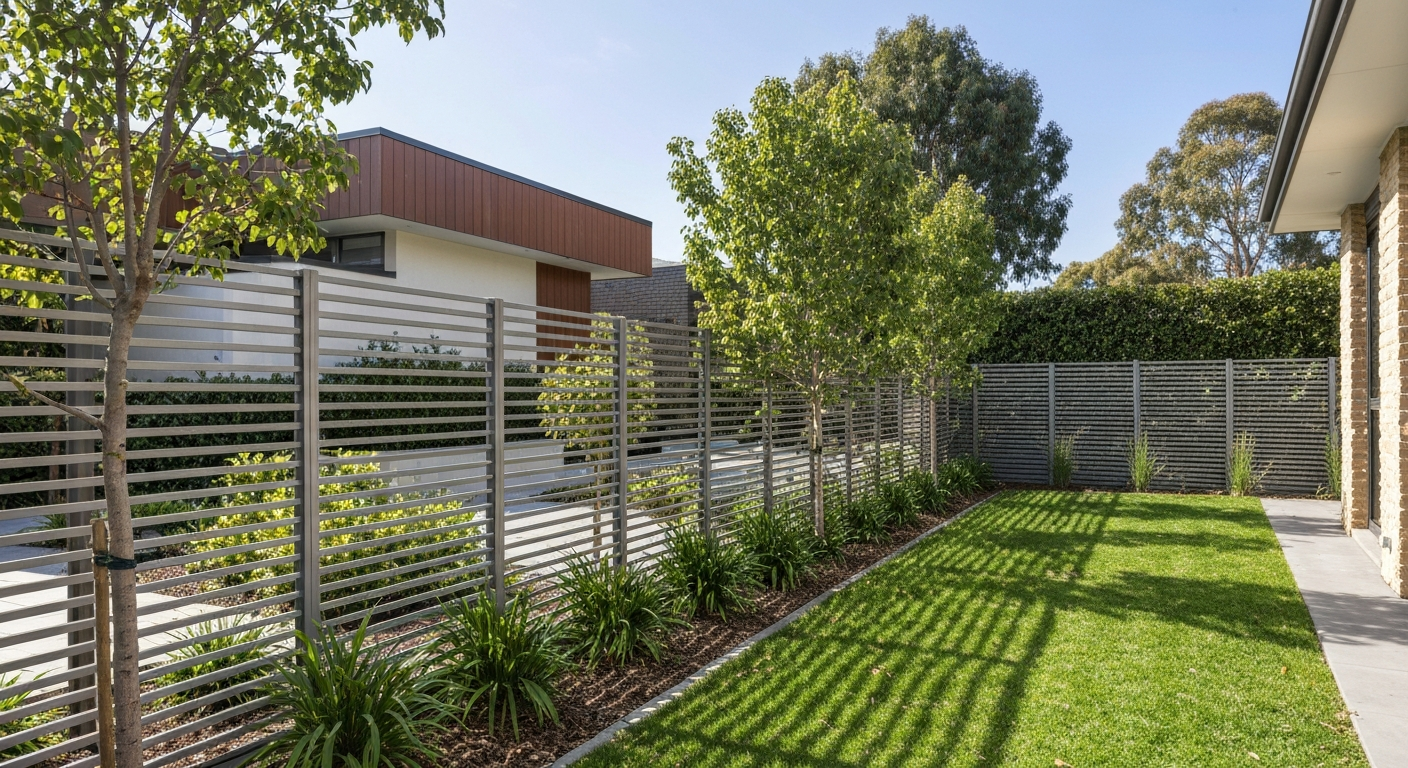
Slatted horizontal styles with deliberate gaps festinate, however they stream seem like louvers. Shadowbox layouts, which alternate boards on each side of the rail, are much better for wind and looks than for sound. Chain relate to privacy slats does little. It stops view far better than noise. Lattice mattress toppers without support are quite but functionally open. If your priority is peace, conserve those features for internal yard areas, not the external line.
Beware slim panels that promise silence. If a Fence Installer can not show you the panel cross-section and message schedule, you are getting hope. Additionally be careful with giant monolithic walls in high wind zones. Without design, they end up being sails. Nothing is louder than a busted fencing waving at 3 a.m.
Maintenance that safeguards the quiet
After the last blog post is established and the last latch examined, the fence begins aging. Timber dries and diminishes. Screws alleviate. Ground settles. Build an upkeep rhythm. Check entrances each spring. Tighten up equipment, adjust locks, and refresh seals if they drag. For wood, reseal or stain on a cycle suited to your climate. Enjoy the bottom edge where lawn sprinklers strike. Change any board that cups or splits enough to develop a space. Keep plants trimmed off the surface so they do not pry boards apart.
If you utilized specialty acoustic panels, clear debris from absorbent faces so they keep functioning. Reject dust, do not press wash strongly, and inspect for splits after tornados. When a fencing stays tight, its acoustic performance holds.
A short word on dimension ratings
You might see STC scores in brochures. STC, or Noise Transmission Course, works well for walls in buildings. Outdoor fencings see more complicated paths, with sound diffracting over the top and around sides. Treat STC as a laboratory overview to product potential, not a guarantee in your lawn. Area results depend extra on format, elevation, and sealing than the laboratory number alone.
How experienced Fence Installers phase a noise project
Good crews begin with paying attention. We ask you to mention the trouble times and the worst sources. After that we walk the line, flag elevations, and mark origins and energies. We simulated up a height panel where code is limited. When the strategy is set, we established blog posts first and allow concrete treatment fully. Hurrying panel hang on eco-friendly concrete is a quiet killer of alignment. We preassemble entrance frames and examination seal brushes up on a scrap sill before drilling the last holes. The last action is a daylight check. If we can see pinholes, we shut them. Only then do we call it done.
Fence Professionals who treat noise as a craft, not an add-on, will certainly show that discipline. They gain references since the yard sounds various the next day.
Final assumed from the field
A peaceful lawn is not a luxury. It is the difference between a grill you make use of weekly and one that gathers dust. You do not require wonders. You require smart elevation, genuine mass, and no spaces, mounted by a Fencing Installer that understands wind, dirt, and sound. Whether you choose timber with truthful joinery, a composite line backed by steel, or a masonry base with a customized topper, the appropriate build transforms a severe edge into a soft limit. Fence builders who have battled rattling entrances, challenging slopes, and tough HOAs know just how to arrive. When you depend on your patio area and hear wind in the leaves instead of tires on asphalt, you will certainly understand you worked with the appropriate team.